







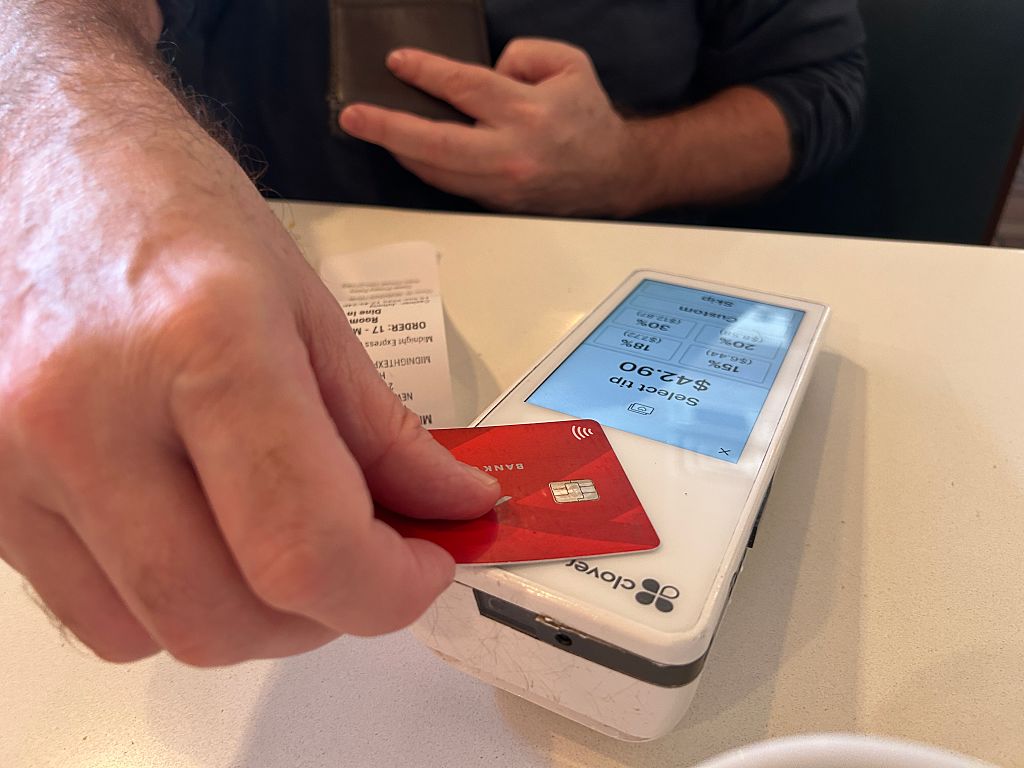
The American consumer’s wallet has quietly but radically transformed over the past decade. Cash may once have been king, but it has lost its throne. We are firmly in a world ruled by swipes, taps and signatures.
Read more Rating the 2026 Governor Races: The Toss-Up States
Those are some of the takeaways from a Pew Research Center analysis of consumer payment choices. The survey, conducted by the Federal Reserve Bank of Atlanta, asked participants to report every transaction they undertook in the last three days, including how much they paid and how.
The shift from cash to credit has been relatively obvious. We minted the last pennies a year ago. Plastic has become nearly frictionless – try telling anyone in Gen Z about the non-electronic device that used to make a carbon copy receipt at 1980s registers in the era before chips. (You can still buy a vintage “Knucklebuster.”)
But the takeover has been more recent than you might think, driven by a shift in consumer habits that now leaves policymakers with some tough questions.
From Cash to Credit
Cash was still the most commonly reported payment type in the 2015 Federal Reserve survey, accounting for a third of payments that year. Debit cards were the second most popular, with 29% of payments. Then came credit cards, at 18%.
In the last decade, that list has fully flipped.
Cash lost the top slot to debit cards in 2018, and credit cards then took the lead in 2022. Today, credit cards account for 34% of payments, with debit cards close behind at 31%. Cash is a distant third at 14%.
The data also reveals a gap between what payment method Americans would prefer to use and what they actually reach for.
Read more US Closes Review of US Airlines’ Data Privacy Without Seeking Penalties
The folks using plastic are pretty content: Nine out of 10 in-person credit or debit card payments are by people who want to pay that way. But when it comes to cash, 70% of payments are made by people who would prefer another method – typically credit or debit cards.
So why aren’t they? Minimum purchase rules? Merchant fees? Technology gaps? Businesses that, for whatever reason, prefer cash transactions? There are clearly some forces keeping the old greenback in business.
Yet those holdouts are increasingly the exception. A separate Pew survey from August underscores just how much habits have changed: 42% reported never using cash in a typical week, up from 24% in 2015.
The Policy Questions
The shift from cash to credit and debit isn’t just a fascinating consumer trend (or a test for parents when a child loses a tooth). It spurs some interesting decisions for policymakers.
It’s worth considering that the transition away from cash as the dominant payment method wasn’t mandated in a presidential order, brought about in a Supreme Court ruling or voted on by the House and Senate. It happened one transaction at a time.
Read more US Judge Blocks Trump Policy of Fining Migrants up to $1.8 Million
We all get the… credit.