







Election Day this year will determine who holds the keys to influential executive mansions across the country. Thirty-six states have gubernatorial contests on the ballot, and the results in November will determine whether Democrats control a majority of the nation’s governorships for the first time since 2010 or whether Republicans maintain the numeric advantage they’ve largely held over the last three decades.
Read more US Closes Review of US Airlines’ Data Privacy Without Seeking Penalties
The GOP currently controls 26 governorships to Democrats’ 24, and each party holds 18 of the 36 seats at stake in 2026. A Democratic majority is a real possibility on the heels of these midterms, but Republicans aren’t out of the hunt yet.
Our gubernatorial ratings are based on demographic and polling data, as well as historical trends and the perspectives of dozens of political observers across the country.
We’ve taken a look at the Republican-leaning seats and the states where Democrats appear to have the advantage. These are the toss-up states where the races look evenly matched.
Toss-Up (5 races)
Georgia: Open seat (Republican Gov. Brian Kemp is term-limited)
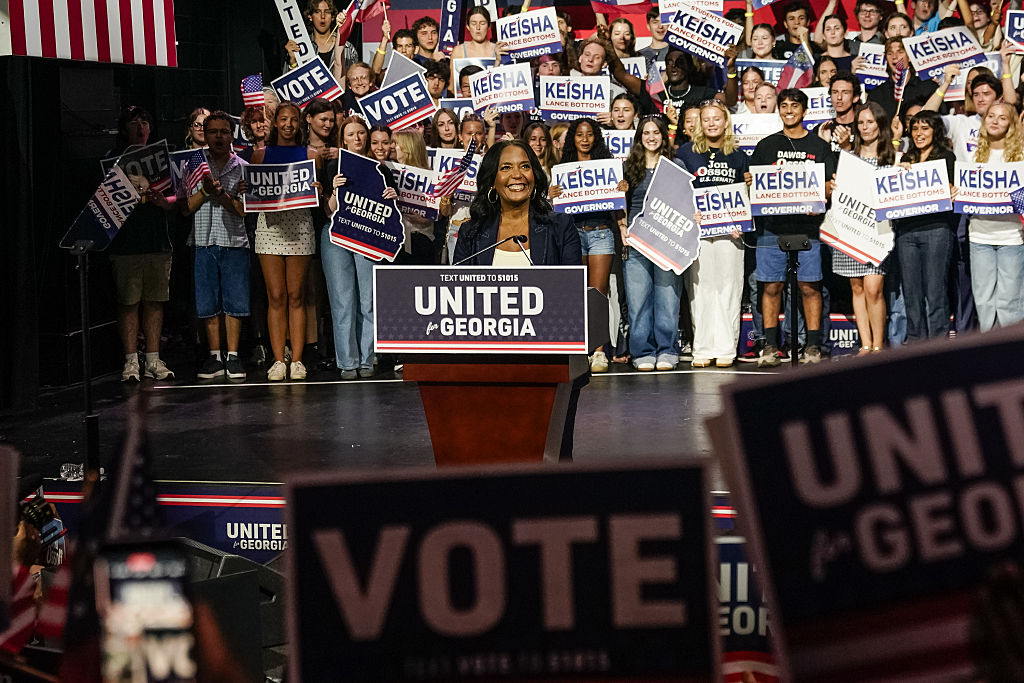
In this open-seat race, Republican businessman Rick Jackson faces former Atlanta Mayor Keisha Lance Bottoms, a Democrat. Big-city mayors can have trouble winning gubernatorial races. Bottoms will need some positive spillover from Democratic Sen. Jon Ossoff, who’s the front-runner to keep his seat, to overcome a big Jackson ad blitz. Jackson’s big spending has helped make this race extremely tight.
Read more US Judge Blocks Trump Policy of Fining Migrants up to $1.8 Million
Nevada: Gov. Joe Lombardo (R)
Attorney General Aaron Ford is seeking to oust Lombardo in this presidential battleground state. Defeating an incumbent governor is difficult (though Lombardo accomplished the feat four years ago), and Lombardo has spent heavily. But can he distance himself enough from Trump in the current blue environment? And will Latino voters unhappy with the president take it out on him?
Alaska: Open seat (Republican Gov. Mike Dunleavy is term-limited)
Alaska’s vast bipartisan field under its top-four primary system has finally winnowed, and Democrats benefited. They have only one candidate left in the ranked-choice contest: former state Rep. Jonathan Kreiss-Tomkins, or JKT, compared with the Republicans’ three (businesswoman and former radio host Bernadette Wilson, former Anchorage Mayor Dave Bronson, and former state Attorney General Treg Taylor). Kreiss-Tomkins has pledged to appoint a Cabinet that’s one-third Democratic, one-third Republican and one-third independent, and his running mate is an independent. In September, an AARP poll found Kreiss-Tomkins up by 10 after ranked-choice tabulation.
Ohio: Open seat (Republican Gov. Mike DeWine is term-limited)
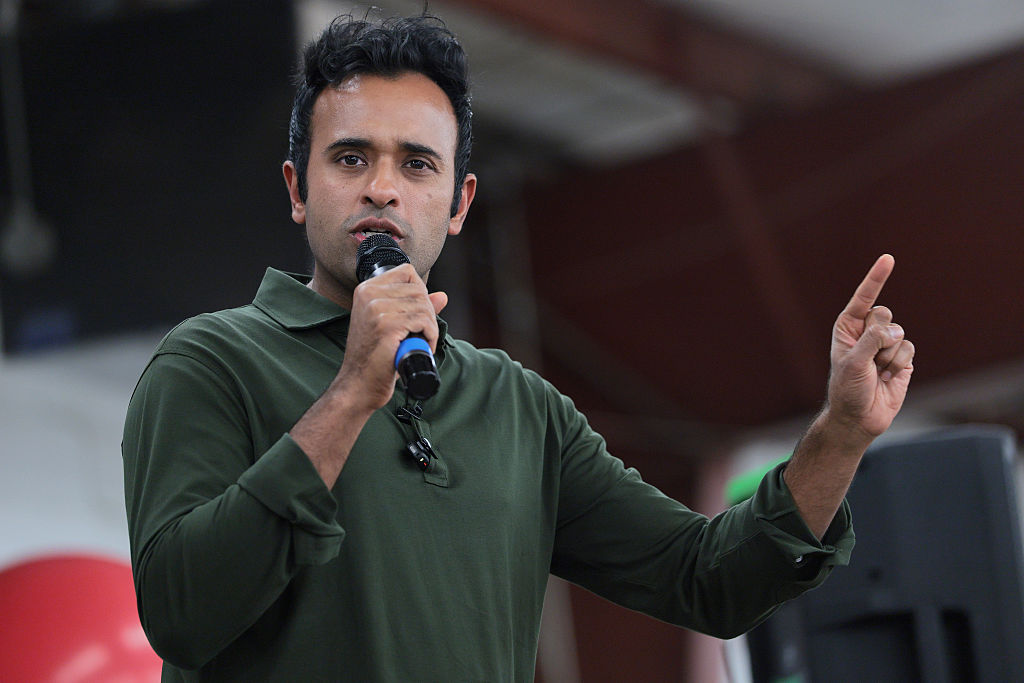
Former state health director Amy Acton, a Democrat, is running unexpectedly well against billionaire and former Republican presidential candidate Vivek Ramaswamy – possibly aided by fellow Democrat Sherrod Brown’s campaign to return to the U.S. Senate. Acton is confident enough to have declined entreaties to debate, and Ramaswamy also has to worry about a Libertarian candidate, Don Kissick, eating away some of his November vote.
Wisconsin: Open seat (Democratic Gov. Tony Evers is retiring)
After a wild primary, the Democrats have a mainstream nominee – Milwaukee County Executive David Crowley – rather than democratic socialist Francesca Hong. That’s a big boost as they take on the GOP nominee, U.S. Rep. Tom Tiffany. Recent polls point to Crowley having a consistently narrow lead.
Read more Trump Says Becton Dickinson to Invest $3 Billion to Expand US Medical Product Manufacturing