





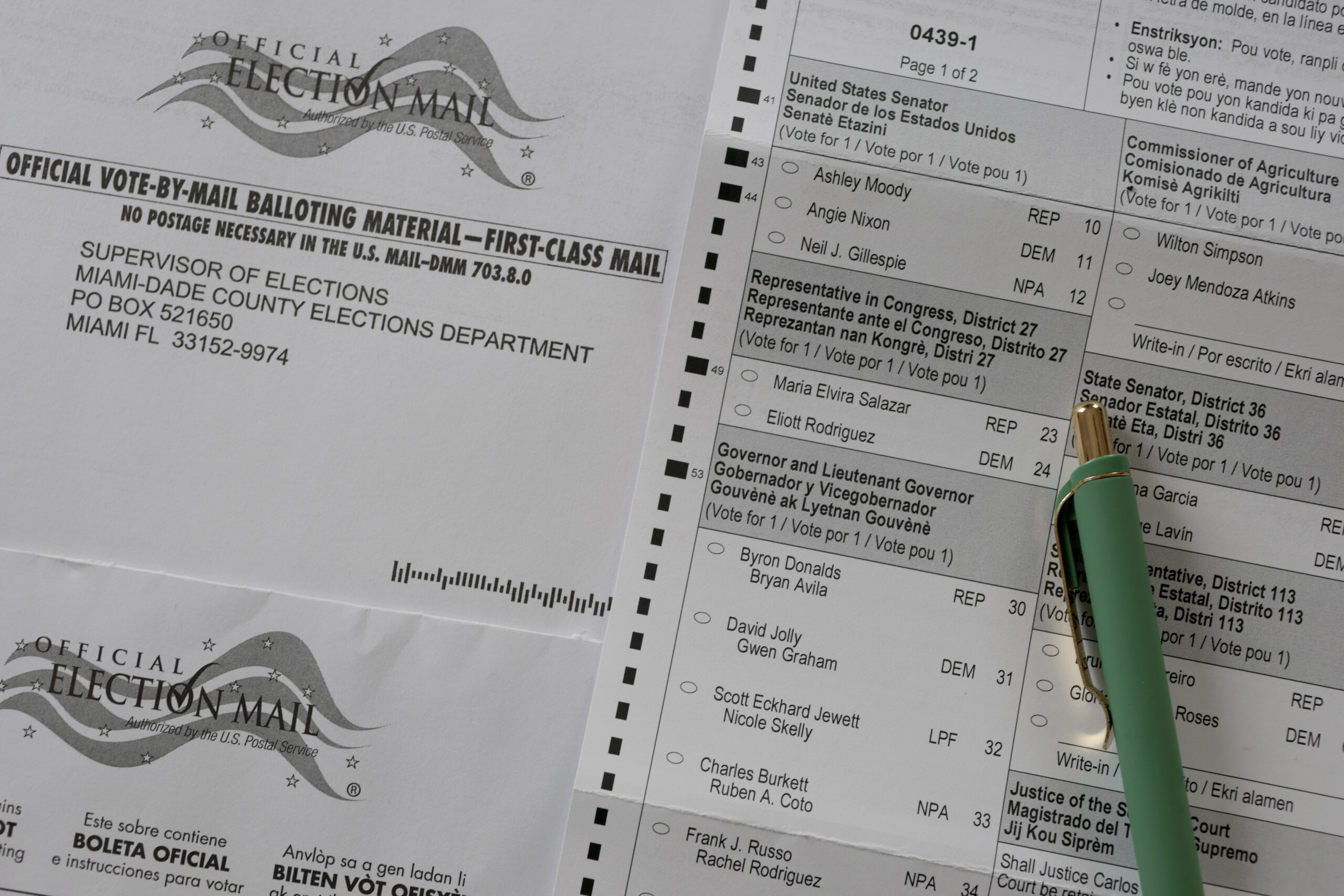
Not every closely watched contest in this year’s midterms is about candidates. Some will ask voters directly about the issues.
Read more How to Vote in the 2026 Midterms: A State-by-State Guide
In 39 states, voters will weigh ballot measures, including questions placed by legislators and others lodged by members of the public who gathered a sufficient number of signatures. Among the most far-reaching ballot measures this year are those that address issues like how elections are run, taxation, transgender policy and abortion.
Here are some of the top ballot measures facing voters this fall.
Elections and Redistricting
Several states will ask voters about changing the way they elect candidates. In Alaska, Ballot Measure 2 would repeal the state’s top-four, ranked-choice voting system, while Massachusetts voters will be asked whether to go the other direction by using a system with an all-party primary followed by a general election pitting the top two finishers against each other. The University of New Hampshire Survey Center’s Bay State Poll in September found the Massachusetts question narrowly favored. A different Massachusetts measure, Question 4, would enact same-day voter registration, and polling shows it leading by a more comfortable margin.
Six states — Alaska, Arizona, Arkansas, Kansas, South Dakota and West Virginia — are asking voters whether they want to prohibit noncitizens from voting. This question is largely rhetorical since noncitizens already are not permitted to vote in federal and state elections. Some places allow it for local elections.
A number of states would stiffen voter identification requirements with the approval of ballot measures: Arizona, California, Colorado, Nevada, North Carolina and Ohio.
Voters in Missouri essentially will be asked whether they support a Republican-led redistricting effort that would likely remove a Democratic-held U.S. House seat. Maryland voters will weigh Question 3, which could green-light the elimination of the state’s last Republican seat in the House. Colorado voters face a question that would make it harder for the party in power (currently the Democrats) to work around current redistricting limits.
Taxes
In California, Proposition 40 would impose a one-time 5% wealth tax on people with holdings that top $1 billion, with the revenue used to fund healthcare and food assistance programs as well as public education. It is backed by progressives, including independent Sen. Bernie Sanders of Vermont.
“Proposition 40 opponents have been deluging voters with ads and are helped by Gov. Gavin Newsom and Democratic gubernatorial candidate Xavier Becerra opposing it,” said Marcia Godwin, a professor of public administration at the University of La Verne. “The ads may be turning voters toward opposing it.”
Opponents of the wealth tax measure are also sponsoring two poison-pill questions – Propositions 41 and 42 – that could negate Proposition 40. California’s Proposition 3, meanwhile, would extend higher income tax rates that fund public schools and community colleges.
Another state – Washington – is asking voters whether to scrap a tax on income over $1 million that was passed by Democrats earlier this year.
Colorado voters can choose between Amendment 87 – which would enact a graduated income tax – and Proposition 136, which would cap the state’s tax rate at a flat 4.4%, its current rate.
In Florida, where ballot measures must receive at least 60% support to pass, Amendment 3 would increase the homestead tax exemption and limit how localities can spend property tax revenue. The boosted exemption would not apply to school-related property taxes, and newer residents could only receive it after five years.
“The Florida Sheriffs Association has come out against it due to potential cuts to law enforcement, while the Florida Realtors came out for it,” said Sean Foreman, a political scientist who teaches at Barry University in South Florida. “Most municipalities have put out numbers of the potential revenue losses, or the need for substitute revenue, and that is starting to resonate. Polls show it will be close.”
Transgender Policy and Abortion
In an election year when transgender policy could again be a potent wedge issue, several states will consider ballot measures on the topic.
In Colorado, Proposition 135 would prohibit gender-related surgeries for people under 18, while the state’s Proposition 134 would divide school sports teams by biological sex while allowing coed teams. Arizona, Nebraska and Washington state will consider similar sports-related measures, while a Vermont measure would amend the state’s constitution to bar the denial of rights to people based on gender identity, gender expression and other characteristics.
Read more Leaked Grand Jury Report on $10M Medicaid Diversion Jolts Florida Campaigns
Missourians will vote on a measure that encompasses both transgender policy and abortion. Amendment 3 would bar minors from gender-transition procedures while also prohibiting abortion in most cases. The latter policy would overturn an abortion-rights measure approved by voters in 2024.
Polling has found that a majority of Missourians approve of abortion rights but that a majority disapproves of transgender operations for minors, said Kenneth Warren, a Saint Louis University political scientist. The inclusion of both issues in a single measure complicates how voters will react, Warren said.
Meanwhile, voters in Idaho, Nevada, and Virginia have measures on the ballot that seek to establish a statutory or constitutional right to abortion.
In Idaho, “the campaign is very hard fought and well funded on both sides, and while there hasn’t been a lot of public polling, expectations I’ve heard around Idaho contemplate a close contest,” said Randy Stapilus, an author who writes on Idaho politics.
Drug Policy
In Massachusetts, Question 8 would repeal the state’s legalization of retail marijuana sales for recreational use while allowing limited possession of the drug. “Polling is scarce, but this is Massachusetts, and the betting is on voters keeping cannabis shops,” said Jeffrey Berry, a professor emeritus of political science at Tufts University.
An Idaho measure, meanwhile, would keep voters from legalizing drugs, handing that power to state lawmakers.
Immigration
In Colorado, Amendment 81 would enshrine a requirement that police contact the U.S. Department of Homeland Security if a suspect is in the country illegally or if their immigration status cannot be determined, and if they are charged with a violent crime or have previously been convicted of a felony. It requires 55% support to pass.
Healthcare
A South Dakota measure would end expanded Medicaid coverage in the state, which was approved by voters in 2022, if federal funding covers less than 90% of the cost.
Guns
Arkansas, Colorado and Idaho have pro-gun measures on the ballot to varying degrees: The Idaho measure, for example, asks voters to advise state lawmakers on which type of firearm should be designated the official state gun, while Colorado’s would establish a constitutional right to hunt and fish. The Arkansas measure would expand on the right to keep and bear arms already enshrined in the state’s constitution.
In Massachusetts, Question 9 will ask whether to keep more stringent gun regulations approved by state lawmakers in 2024. Voters are expected to keep the gun restrictions in place.
Traffic Cameras
Arizona will weigh whether to ban the use of traffic photo enforcement – think speed and red-light cameras – without voter approval. Of the measures on Arizona’s ballot in November, this may be the one most likely to attract bipartisan support, said one political analyst in the state.
Campaign Finance
Michigan voters are being asked whether to ban political donations from regulated utilities and government contractors. “It’s polling huge ‘yes,’” said Bill Ballenger, who publishes a newsletter on Michigan politics. “A big coalition tried to keep it off the ballot but lost in court. Now they realize it’s useless trying to fight it, and they’ll save their money for litigation after the election.”
Similarly, voters in Montana will consider a measure to ban political donations by “artificial persons,” which would encompass entities such as nonprofits, corporations and trade associations. Political observers in the state expect it to pass, with the potential for post-passage litigation as in Michigan.
And in California, Proposition 4 would end a ban on public financing for state and local offices.
Read more Are Democrats Ditching Mail-in Voting?