






Easier to defraud than Olive Garden.
That’s the latest spin on election security by Republicans, who last week took to Congress with a new talking point.
Read more Texas Court Says State’s Lawsuit Claiming Midwife Violated Abortion Ban Lacks Evidence
After a six-year hiatus, Olive Garden has reintroduced its Never-Ending Pasta Pass. For $100, customers can procure unlimited refills on pasta for a duration of 13 weeks. With a deal like that, customers were clamoring – and some asked whether families could split a pass.
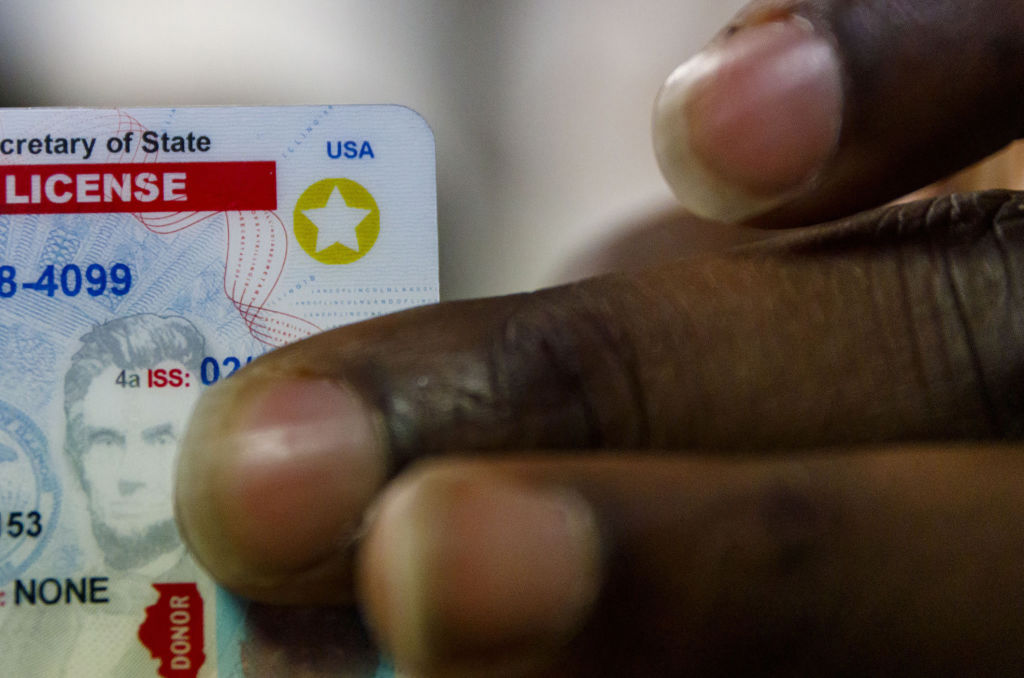
To this, the pasta institution laid down the law: Each customer would need to present an individual photo ID to purchase a pass. And that got the attention of Congress.
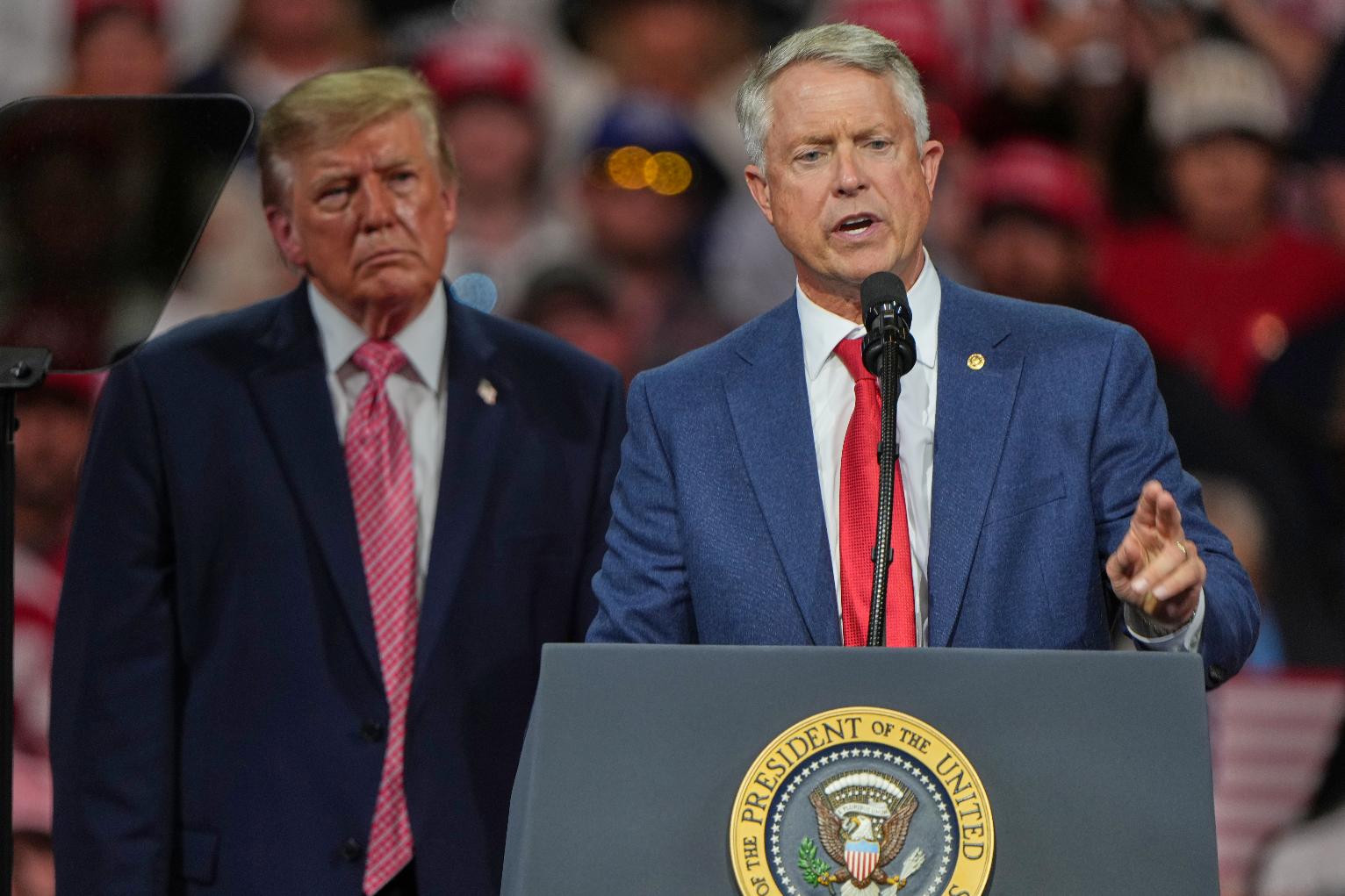
“To safeguard the integrity of their pasta program, Olive Garden has implemented photo ID requirements,” Republican Rep. Bryan Steil said in committee last week. “However, in jurisdictions across this country like Illinois, California and Minnesota, an individual can go to the polls on Election Day and cast a ballot – without providing confirmation of their identity. In other words, Madam Chair, we are protecting our breadsticks more than our ballots.”
The debate over requiring voter ID at the polls on Election Day has long been a contentious one. Efforts to push through a national voter ID requirement have been accelerated with the introduction of the Republican and Trump-backed SAVE America Act.
Yet election requirements have historically been state-regulated, dating back to the election clause of the Constitution, which specifies that control over congressional elections should be in the hands of states. Today, 36 states of their own volition do require ID to vote. Often, states will draw on systems already in place for city or municipal elections – with the goal of minimizing rule changes across elections, facilitating a clearer process that makes voting accessible to the greatest number of constituents. As Congress continues to debate stricter ID laws over security concerns, participation in elections themselves is at risk.
What Is the SAVE America Act?
“For God’s sake – you can’t get pasta at Olive Garden without a picture ID! Why not be able to show a picture ID to vote?”
This remark by House Majority Leader Steve Scalise represents the Republican framing of the SAVE America Act as a bipartisan bill, uniting both sides of the aisle on what they brand as “common sense” legislation.
Introduced on Jan. 29, the SAVE America Act has three core tenets: requiring valid ID to register for federal elections, proof of citizenship and an end to mail-in ballots. The bill has been a legislative priority for President Donald Trump, and after being blocked in the Senate through a filibuster by Democrats, Republicans have attempted to attach it to a spending bill.
Republicans’ critical rationale for stricter voter ID is to help combat threats to election security, particularly influence from China and Russia.
In a July 16 address to the nation, Trump claimed that he would release unprecedented evidence that “shows that the election system we have dangerously exposes and really exposes – like levels never thought possible – to hacking, exploitation and foreign interference.”
Read more Ukraine’s Zelenskiy Says Raytheon Wants to Help Produce Interceptors
Many of Trump’s claims on the “shocking vulnerabilities” of U.S. elections were debunked, with reporters drawing distinctions between “vulnerabilities” and breaches.
Why Do People Oppose Strict Voter ID Laws?
Opponents of strict voter ID laws argue that such policies risk decreasing turnout for marginal gain.
Time and again, studies have found that in-person voter fraud rarely occurs, with an incidence rate between 0.0003% and 0.0025% – less than the likelihood of being struck by lightning. A study in The Washington Post found 31 instances of impersonation out of more than 1 billion ballots cast.
On the flip side, researchers have documented that requiring voters to bring their ID to the ballot box decreases voter participation. In 2012, Kansas and Tennessee adopted stringent voter ID laws. After the change, voter turnout declined 2% in Kansas and 2.2%-3.2 % in Tennessee.
The drop in voter participation is key. Despite recent evidence suggesting otherwise, conventional wisdom for years has maintained that lower turnout in elections favors Republicans. And while that school of thought lurks behind GOP calls to increase election integrity, it has also brought on Democratic accusations of voter suppression.
For one thing, a large segment of the U.S. voting electorate does not have identification. A 2020 report by the University of Maryland’s Center for Democracy and Civic Engagement and VoteRiders found that nearly 29 million voting-age U.S. citizens did not have a non-expired driver’s license, and over 7 million lacked another non-expired government-issued photo identification.
In states such as Georgia, Indiana, Kansas, Mississippi, Tennessee and Wisconsin – which require voter ID – this meant that in 2020, over 3 million voting-age U.S. citizens were unable to vote due to a lack of identification.
But beyond that, ID laws affect groups disproportionately on factors including age, race and class and involve demographic groups that have often voted for Democratic candidates. Young people, particularly 18- and 19-year-olds who do yet have a driver’s license, are less likely to have ID. Approximately 6% of Black and Hispanic Americans also do not have valid ID, compared with only 2.3% of white Americans. Lastly, those who have never graduated high school were least likely of all groups to not have an acceptable form of ID, indicating a large class and educational barrier to participation.
So while uncertainty rages over the SAVE America Act, and lawmakers pit voter participation against election security, at least one truth rises above the bruising partisan rhetoric in Washington: ID is a must when using the Never-Ending Pasta Pass at Olive Garden.
Read more Swiss Chocolate Maker Lindt Misleads Consumers About Child Labor, US Lawsuit Claims