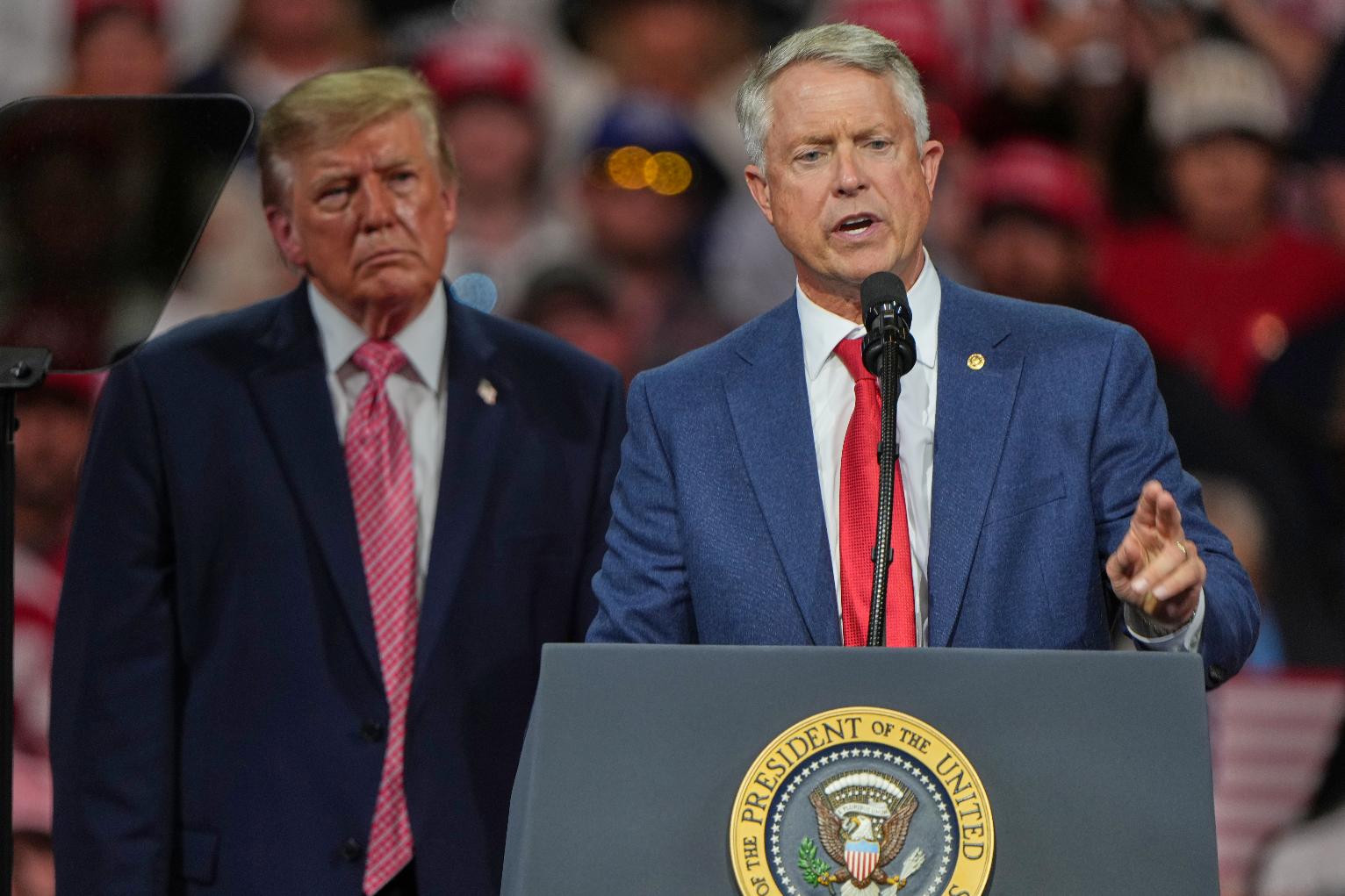










President Donald Trump says that oil prices that have surged during the war with Iran likely won’t come down substantially until after the November midterm elections, raising the prospect that higher energy costs could continue putting pressure on household budgets this fall.
Read more Oil Tanker Rates Hit Record Highs Following Iran, US Shipping Attacks
“Right after the election, oil prices are going to be tumbling downward,” Trump said Wednesday. “I think it’s going to take a little bit longer than the midterm.” Trump’s reasoning in large part resembled conspiracy theory, suggesting that a critically weakened Iran was “desperate” to influence the election in order to get “a nice weak group of people in there.”
Nevertheless, Brent crude, the global oil benchmark, climbed above $100 a barrel Wednesday for the first time since July as strikes escalated and concerns about disruptions to global oil supplies intensified. The national average for regular gasoline reached $4.22 a gallon, while diesel reached $5.94, according to AAA.
For consumers, the uncertainty matters well beyond the gas pump. Prolonged high oil prices can increase the cost of gasoline and diesel while also putting upward pressure on transportation, food, airfare, shipping and other everyday expenses.
Gasoline Isn’t the Only Fuel Getting More Expensive
Gasoline is one of the most visible effects of the oil shock, but diesel prices may have a broader impact on household budgets. Diesel powers long-haul trucks, farm equipment and other machinery used to produce and transport goods.
Diesel prices have reached record levels as the conflict disrupts global energy markets. Jet fuel has also become more expensive, prompting some airlines to cut flights while raising fares and fees.
Crude oil is a major component of gasoline prices, but the price drivers pay also depends on refining, distribution, retail margins and taxes. That means oil and gasoline prices don’t necessarily move in lockstep.
Higher Oil Prices Can Show Up at the Grocery Store
Higher diesel costs can increase expenses throughout the supply chain, from operating farm equipment to transporting products between farms, processing facilities, distribution centers and stores. Those costs can eventually be reflected in the price consumers pay for food and other goods.
“Every dollar increase at the pump acts like a regressive tax, hitting lower- and middle-income households hardest since fuel is a fixed cost they can’t easily cut,” says Jeff Judge, a certified financial planner with Chesapeake Financial Planners.
“If oil stays elevated into next year, expect it to show up in everything from grocery delivery to airfare, not just gas station signs,” Judge says.
That doesn’t mean every grocery item will immediately become more expensive, or that prices will rise by a predictable amount. Businesses can absorb some fuel costs, find efficiencies elsewhere or pass some of the increase along to consumers.
Read more Lindsay Clancy’s Lawyer Asks Judge to Find Her Not Guilty After Mistrial
But transportation costs can take time to work their way through supply chains, meaning some effects of an extended energy shock may not appear immediately.
Travel, Shipping and Deliveries Could Cost More
Air travelers are particularly exposed to higher jet fuel costs. Airlines have already responded to the increase by cutting some flights and raising fares and fees.
Consumers could also see higher shipping and delivery costs. Trucks, ships and other freight vehicles depend heavily on petroleum-based fuels, so more expensive diesel can increase the cost of moving everything from furniture and appliances to online orders.
That can eventually show up as higher delivery charges, fuel surcharges or higher prices for the goods themselves. The effects can extend beyond products that are delivered directly to consumers because businesses also rely on freight to move raw materials and finished goods.
How Long Could the Price Pressure Last?
Trump’s comments shouldn’t be treated as a firm date for when oil or gasoline prices will fall. Oil markets respond to global supply and demand, and prices could decline before the midterms if disruptions ease — or remain elevated beyond November if the conflict continues to restrict supplies.
The Strait of Hormuz is a major source of uncertainty. Before the conflict, roughly one-fifth of the world’s petroleum passed through the waterway, and the disruption has sharply reduced oil flows from the region.
The Energy Information Administration has also raised its diesel price outlook, citing tight global supplies and low inventories. Its latest forecast calls for average U.S. diesel prices of $4.40 a gallon in 2027, up from its previous estimate of $4.07.
For households, Judge says the bigger lesson isn’t to try to predict exactly where oil prices are headed.
“Geopolitical shocks like this are also a reminder that energy costs aren’t fully within anyone’s control, including the White House’s,” Judge says. “The practical takeaway for household budgets isn’t predicting where oil goes next; it’s building enough cash flow cushion that a few months of higher prices at the pump doesn’t derail the rest of the plan.”
For now, the most immediate pressure is likely to remain at the gas pump and in transportation costs. But if oil stays elevated for months, the effects can gradually spread through supply chains, adding pressure to groceries, travel, deliveries and other household expenses.
Read more First US Horse Case of Screwworm Detected in Texas Border County