
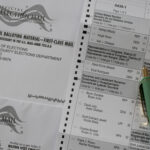








Mail-in voting is at the center of a legal and political fight ahead of the 2026 midterm elections, and new regulations put forward by the Trump administration are emerging as the next flashpoint.
Read more Today’s News: Sanctions for Iran, Tariffs for Canada and a Wildfire in Nevada
The U.S. Postal Service published a rule on Aug. 21 that would establish additional requirements for how states prepare and submit federal mail-in ballots for delivery.
The comes after President Donald Trump – long an opponent of mail-in voting – issued a March executive order directing the agency to establish uniform standards for federal mail-in and absentee ballots. The Postal Service says the changes are intended to improve the visibility and tracking of ballots and assist with enforcement of federal law, but critics argue that they are an overreach intended to insert the federal government into elections processes run by the states.
Controversially, the executive order instructs states to provide the federal government with lists of citizens, and bars the Postal Service from sending mail-in ballots to states that refuse to do so.
In an emergency opinion issued Monday, the Supreme Court ruled that the administration could proceed with the new restrictions, though more court rulings are expected. The first mail ballots for this fall’s elections will be sent to military and overseas voters from North Carolina on Sept. 4.
Here’s what to know about the latest developments.
What’s the Latest?
The legal landscape shifted Monday, Aug. 24, when the Supreme Court voted 6-3 to lift one lower-court injunction blocking key portions of Trump’s mail-voting executive order. The decision allows the administration to move forward with parts of the order, including plans involving federal voter-eligibility lists and USPS ballot procedures, but it didn’t resolve whether the broader order is lawful.
A separate injunction blocking USPS from implementing a key portion of the order nationwide remains in place, leaving uncertainty about whether the new requirements can be implemented before the November midterms.
What Does the New Postal Service Rule Say?
The rule applies to federal mail-in and absentee ballots. It doesn’t change state laws governing who can vote by mail, how voters qualify for an absentee ballot or whether a completed ballot is ultimately counted.
One major change would be requiring standardized elements on federal ballot envelopes, including the official election mail logo, automation-compatible designs and unique intelligent mail barcodes on both outgoing and return envelopes. The Postal Service says the barcodes would allow individual pieces of ballot mail to be tracked as they move through the postal system.
How Would the New System Work?
Under the rule, elections officials would use a new “federal ballot mail portal” to submit information about voters receiving federal mail ballots before the ballots enter the mail stream. The information would include a voter’s name and address, the issuing state and the unique barcodes assigned to the outgoing and return envelopes.
Importantly, voters themselves wouldn’t enroll with the Postal Service or be responsible for entering or correcting information in the portal. That responsibility would fall to state and local elections officials and their authorized vendors. The Postal Service also says the portal wouldn’t collect information such as Social Security numbers, birth dates or the contents of a voter’s ballot.
Read more More States Crack Down on Student Cellphone Use in Schools
The Postal Service says it wouldn’t determine whether someone is eligible to vote or know how an individual voted. The agency also says it won’t open ballot mail or know the contents of ballots.
But critics are concerned that too much voting information and authority could end up in the hands of the federal government and that the changes could confuse or intimidate voters.
Why Is the Postal Service Making the Changes?
The Postal Service says the new requirements are designed to make federal ballot mail easier to track and reconcile, while providing information that could assist law enforcement in investigating potential election-related violations. Supporters of the rule told the Postal Service that better tracking could help identify discrepancies between ballots sent and received and improve confidence in the mail-in voting process.
Despite frequently voting by mail himself, Trump has repeatedly spread falsehoods about the practice, calling it “corrupt” and “dangerous” and claiming that the process is rife with fraud.
The Postal Service received more than 200,000 comments on the proposed rule, including submissions from election officials, state attorneys general, voting rights organizations, postal unions and members of Congress. Supporters argued that the additional tracking and accountability would strengthen election administration, while opponents raised concerns about the rule’s legality, implementation burdens, potential data errors and the possibility that ballots could be rejected due to administrative problems.
The Postal Service maintains that the rule regulates how federal ballot mail is prepared and documented rather than determining who can vote. It also says states will retain control over voter eligibility and ballot counting.
What Does This Mean for Voters in 2026?
For now, nothing changes for voters using mail-in ballots in the November election because the rule remains in legal limbo.
Though the Supreme Court lifted a block on Trump’s mail-in ballot rules, a federal judge in Massachusetts has barred the Postal Service from implementing some provisions for the 2026 election, including some involving mail-in or absentee ballots. A final decision on the new rules is expected soon.
If the executive order ultimately goes forward, the Postal Service says it intends to move quickly to implement the rule.
For voters, the practical takeaway is to continue following the mail-in voting instructions and deadlines issued by their state or local election officials, which remain responsible for determining eligibility and deciding whether completed ballots can be counted.
Read more South Carolina Republicans Weigh Graham and Norman for Senate Nomination