







The 2026 primary season came to a close Tuesday night with incumbents and expected challengers both winning easily in Delaware.
Read more What Trump Has Tried to Change About the 2026 Election – and What Courts Have Blocked
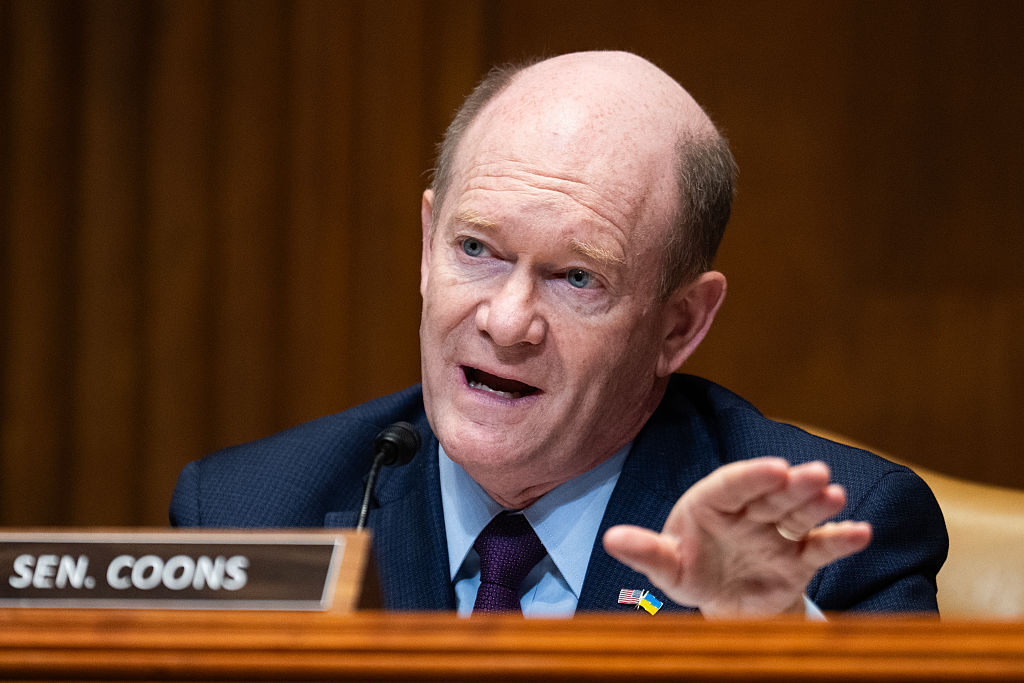
In the evening’s main race, Sen. Chris Coons, a Democrat seeking a third full term in Washington, easily bested three challengers, including one who had legally changed his name to E. No-Trump Hansen. Hansen received just 3.9% of the vote.
Coons will face Republican Mike Katz, an anesthesiologist and former state senator. Both races were called by The Associated Press less than 20 minutes after the polls closed.
Questions for November
Broadly speaking, it has been a good primary season for the extremes of both main parties. Democrats like Abdul El-Sayed in Michigan and Darializa Avila Chevalier in New York won by mobilizing the progressive left.
On the Republican side, challengers such as Ken Paxton in Texas and Ed Gallrein in Kentucky ousted GOP incumbents whom they painted as insufficiently loyal to President Donald Trump.
As November approaches, a key question for candidates who won by running to either the left or the right is whether they can mobilize moderate voters who rejected them in their respective primaries. This is especially true for candidates like El-Sayed and Paxton who are running statewide.
El-Sayed’s campaign will test whether a strong progressive can win a purple state that Trump carried by just 80,000 votes two years ago.
For Paxton, the question is whether Texas’ deeply red recent history (no Democrat has won statewide since 1994) will outweigh his personal history of controversy and scandal.
Senate Races to Watch
To take control of the Senate, Democrats must hold all 13 of their seats up for election and flip four Republican-held seats, at least three of which would be in states carried by Trump in 2024. Of the 22 GOP-held seats on the ballot this year, only one – Maine – is in a state carried by then-Vice President Kamala Harris.
Read more Is AI Escaping Human Control? Where Sanders, Trump and Others Stand on the Risk
Maine, Alaska, North Carolina, Texas and Ohio are generally believed to be the Democrats’ best pick-up opportunities, but to take control of the upper chamber they would need to win almost all of these while losing no ground elsewhere.
Michigan and New Hampshire – both states where Democratic incumbents are retiring – are the strongest pick-up opportunities for Republicans.
Uncertainty About the House
In the House, history favors the Democrats, who need a net gain of only four seats to take control. The president’s party has lost House seats in all but two midterm elections since 1938.
November will test whether both parties’ midterm redistricting has been a success or failure. A recent analysis by The Economist found that swing voters are moving away from Trump and Republicans, possibly in ways that may lessen the impact of newly drawn congressional district lines.
Partisan Rhetoric Is Rising
At last week’s Republican midterm convention in Dallas, Rep. Tom Emmer called the coming election a choice between “common sense and communism, between America-loving patriots and hate-America extremism.”
On the Democratic side, Rep. Jim McGovern recently warned Republicans of a “fascist MAGA takeover eating their own party alive.”
If one thing seems certain, it is that the coming weeks will see more of this sort of rhetoric on both sides.