








The debate over aggressive surveillance has historically centered on the state – government was the Big Brother in “1984,” reaching into and dominating every facet of human life. That’s understandable: It wields immense power.
Read more US Senate Panel Approves Bill to Crack Down on Chinese Vehicles
But technological breakthroughs are now reshaping fears about spying to include the guy recording his surroundings while sitting next to you in the coffee shop or the reclusive neighbor with the “smart” doorbell that watches you, unblinking, every time you leave the house.
For years I have joked that the coming surveillance dystopia will be a robust public-private partnership, not one modeled on George Orwell’s all-consuming English Socialism. A few recent developments make me think that dystopia is already here, courtesy of consumer electronics.
To repurpose the old anecdote: We appear to have accepted that we’re going to be recorded. Now we’re just haggling over whether we can stop people from doing so in secret …
White Light, White Knight?
… because it turns out that’s apparently what millions of them want to do. Consider the tug of war involving Meta’s AI glasses, pitting the company against its own users, who desire to film or photograph other people without their knowledge, much less their permission.
Each pair has a white light in the forward-facing part of the frame. Meta says the light blinks once when the wearer takes a photo and blinks continuously as long as they are recording a video.
“It’s there so people around you know when you are taking a photo or video you could save to your gallery and share with others,” the company said in an early July post on its official website.
So what are some users trying to do? They started by covering up the light. Meta made it so the camera is disabled if the company detects that what it calls the “capture LED” has been blocked. So users escalated to “sophisticated efforts” to modify or destroy the light.
“Now we’re updating the glasses to disable the camera if they detect the LED was physically tampered with or destroyed,” Meta said in its July 7 post.
The stakes aren’t just about who appears on whose camera roll: Two Harvard undergraduates showed in 2024 that you could pair “smart” glasses with face search engines, large language AI models and public databases.
“Their viral project, I-XRAY, is a pair of glasses that reveal to the wearer anyone’s personal details – home address, name, phone number and more – just by looking at them,” according to a Harvard University post.
Read more Chinese AI’s Role in Stopping Rogue OpenAI Agent Shows Cost of US Guardrails
No thanks.
Recording Everything
The Meta glasses thing was pretty scary, but the impetus for this column was a Wall Street Journal piece last week in which Katherine Bindley documented people recording … pretty much everything and running it through AI.
“Asking for permission is out, even though in some situations, that could mean violating the law. It isn’t creepy if it’s in the name of productivity, say the people doing the recording,” Bindley wrote. (I’m here to tell you that nonconsensual recording is, in fact, creepy.)
Here, too, consumer electronics are making it increasingly easy to record others, notably a transcription app called Granola that does not store audio but produces a word-for-word transcript, along with summaries or possible action items.
The showstopper in Bindley’s piece was the woman who uses Granola on “most of her first dates” then “has the feed automatically sent to Anthropic’s Claude to report back on how she did.” That includes a breakdown of who spoke for what proportion of the encounter.
Would you speak differently if you knew anyone around you might be recording?
Search Party or Hunting Party?
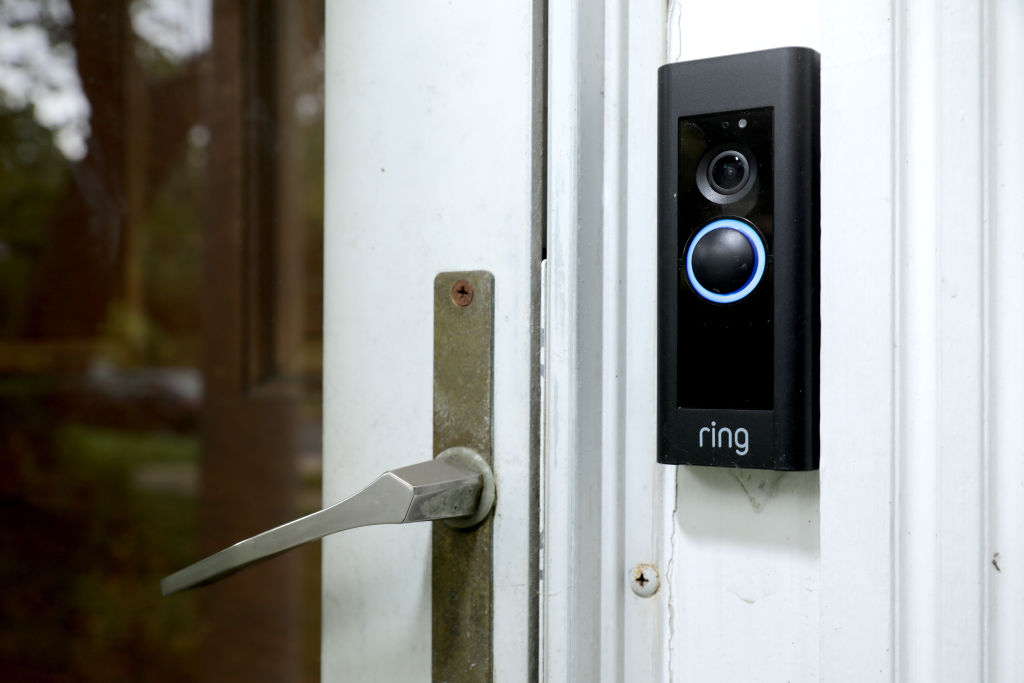
Would you dress or act differently if you knew that your neighbor’s smart doorbell not only recorded who comes to or leaves your house but is connected to what amounts to a surveillance grid?
That’s the concern raised by the Electronic Frontier Foundation about Amazon’s Ring and its Search Party feature, which uses AI to scan footage from nearby smart doorbells. Amazon sells this tech as a way to reunite lost pets and their distraught owners.
But the technology, EFF wrote, could usher in “a world where biometric identification could be unleashed from consumer devices to identify, track and locate anything – human, pet and otherwise.”
Since Ring regularly interfaces with law enforcement, it does not take much to erase the boundaries between private security and public surveillance.
Barring a political response to rein in the brave new world of small, cheap, effective tech, we’re looking at a world in which every glance is an act of surveillance and every neighbor is a data collector.
Read more EU Regulators Clear With Conditions Paramount’s $110 Billion Bid for Warner Bros
The future is less Big Brother than everyone and their brother.