








Thanks to streaming technology, it’s easier than ever to buy a movie, a song or a video game without ever leaving your living room. But many consumers don’t know that they are shelling out for a license to play the media that the distributor can discontinue.
In other words, you don’t really “own” it.
That’s where a physical copy can be reassuring. No one is showing up at your house to demand you hand over your DVD of “Casablanca.” But if your provider loses streaming rights to the movie or shuts down entirely, you may be out of luck if you went purely digital.
How angry would you be if you shifted to an all-digital library then lost access to “Terminator 2” because it vanished from your provider’s library of offerings?
In late June, Sony informed its PlayStation customers in a legal notice that they would lose all StudioCanal movies from their video libraries come Sept. 1 “due to our content licensing agreements.” It did not elaborate or announce any plans for reimbursements.
That development, first reported by PlayStation LifeStyle, means folks who bought digital copies of “Apocalypse Now: The Final Cut,” or “Bridget Jones’s Diary” or, yes, “Terminator 2: Judgment Day” and hundreds of others are out of luck.
It’s not the first time Sony has done this. In 2023, for example, the company announced that PlayStation owners would lose all of their Discovery TV content. Facing a significant backlash, it retreated, announcing “updated licensing arrangements.”
“What’s truly worrying amid talks of an ‘all-digital’ future is that PlayStation users are losing content that they purchased, with no word (and probably no chance) of a refund,” PlayStation LifeStyle noted at the time.
Sony is far from the only company to do this. In a supreme moment of irony, Amazon reached into users’ Kindle tablets in 2009 to remove George Orwell’s “1984” and “Animal Farm,” saying the digital versions were pirated. The company later apologized and offered refunds after a public outcry.
No More Games on Disc for Sony
But just as Sony pulls back digitally “purchased” movies, it has announced digital is the only option for its games.
Sony PlayStation has been a standard appliance in millions of American living rooms for decades. (Disclosure: I own one and play pretty much every day.)
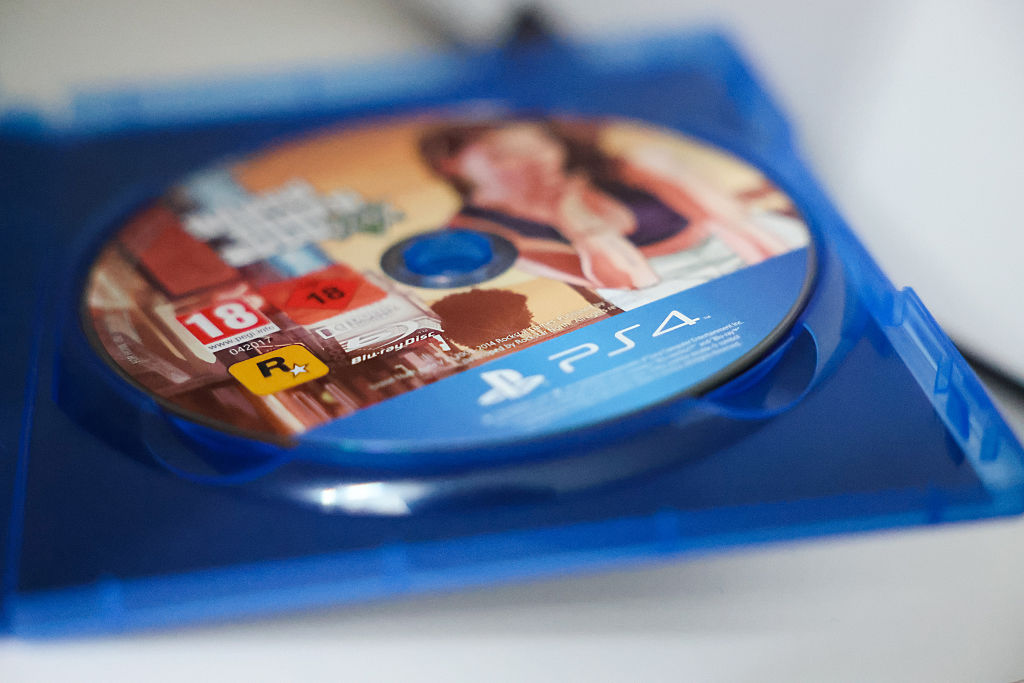
So it was something of a digital earthquake when Sony announced via its official PlayStation blog this week that it would cease production of video games on physical discs come January 2028.
Read more Progressives Notch Another Big Win in Colorado Primary Elections
“This is a natural direction for Sony Interactive Entertainment to adapt to consumer trends as the general preference for digital media significantly outpaces physical discs,” the company said. “This transition will enable us to align more closely with how most of our community prefers to access and play games today.”
No one has ever waded into the comment section of a website to say “this is adequate,” but even allowing for that self-selection factor, the reaction appears uniformly negative, with some readers saying they won’t shell out for the company’s next console if games are digital-only.
What the Market Says
Overall consumer spending on video games in the United States increased 1.4% from 2024 to $60.7 billion in 2025, according to data from the Entertainment Software Association, Circana and Sensor Tower.
But the picture for games on discs is not as sunny, according to Mat Piscatella, Circana senior director and video game industry advisor.
Spending on new physical video games in 2025 was $1.5 billion, a record low since Circana started tracking that figure in 1995, he said. That’s well below a peak of $11.6 billion in 2008.
The only bright spot: New physical game spending fell 11%, the lowest rate since 2021. But that just means that part of the market is shrinking less rapidly – which is not the same as growing.
“New physical video games will last only as long as the console manufacturers allow them to,” he wrote. “Been saying this for years, and here we are.”
A Digital-Only Smash?
One possible test for the theory that gamers are shutting the door on physical games will come later this year with the digital-only release of “Grand Theft Auto VI,” which is expected to shatter sales records. That’s coming on Nov. 19.
If it meets expectations, validating that model, the debate over physical media may be over well before 2028 – at least outside of pockets of old-school resistance (like me). Most of us seem happy to pay for things that we can’t really call our own.
Read more Can Police Access Your Phone’s Location Data? Here’s What the Supreme Court Said