








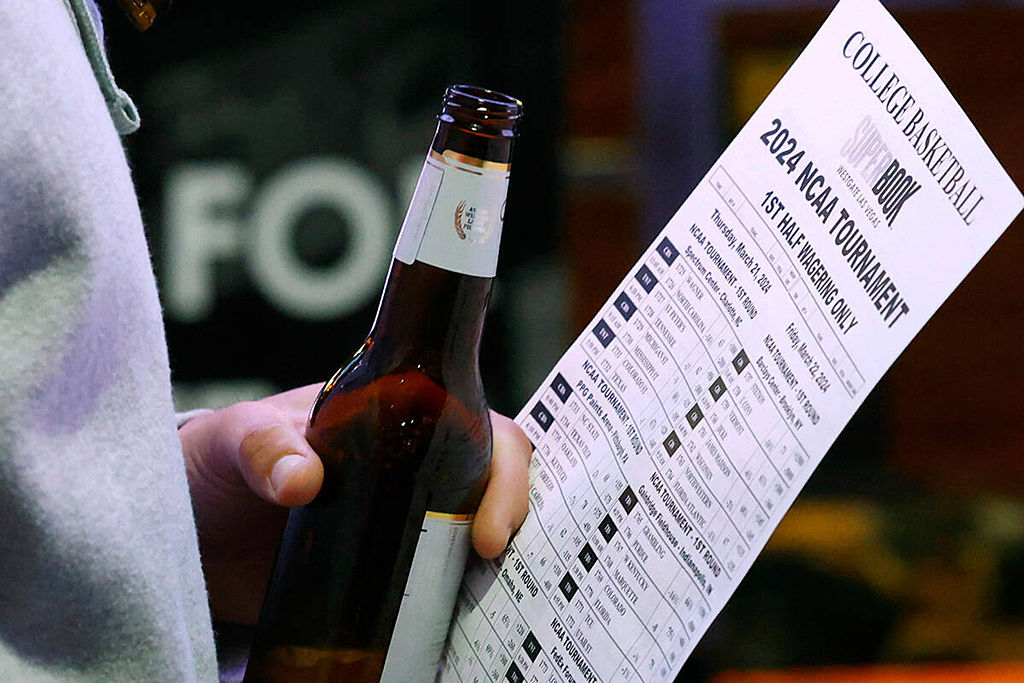
The United States is in the middle of a vast experiment with legalized gambling. Sports betting is legal in 39 states and Washington, D.C., with 30 states facilitating it through smartphone apps or websites (that you’ll see advertised during almost any live sports broadcast).
Read more Former NBA Players Malik Beasley, Ed Davis Indicted on Gambling-Related Charges
The proliferation of commercials loudly encouraging you to wager is merely an annoyance. The bigger questions for the country are what legalized gambling will do to sports’ integrity (see Sorsby, Brendan) and what sorts of mental and economic effects we will see over the longer haul.
A new study offers one answer: In states that permit sports betting, gambling disorders surged more than 60% from 2018, when the Supreme Court freed states from a federal ban, to 2026. That’s according to Epic Research, a public benefit corporation that tracks public health phenomena using data from its parent company, electronic healthcare record firm Epic Systems. It defines the disorder as continuing to gamble “despite financial, emotional or social harm.”
In this case, researchers looked at medical records of 197 million American adults with at least one healthcare visit. The largest proportional increase was among adults 18-29, among whom the rate more than doubled. Young men were hardest hit.
Key Findings
The 60% increase figure actually understates the state-level impact, since the quarterly rate of gambling disorders both rose sharply in states where sports betting was legalized and dropped sharply in the others.
In legalizing states, the rate rose from 3.0 per 100,000 patients in the first quarter of 2018 to 4.8 per 100,000 in the first quarter of this year.
States that have not legalized sports betting saw their gambling disorder rates fall from 3.1 per 100,000 in the first quarter of 2018 to 2.2 per 100,000 in the first quarter of this year, a 29% decrease.
Age and sex matter, too. Epic found Americans 30-49 had the highest overall rates, climbing from 4.1 to 5.8 per 100,000 between 2018 and 2026. Those 50-64 saw an increase from 4.1 to 4.9 per 100,000.
The sharpest increase was among men 18-29, who saw their rate of problem gambling more than double, from 3.2 to 7.7 per 100,000 over the span of the study. Their female counterparts went from 0.5 to 1 per 100,000.
Read more US Supreme Court Orders Lower Court to Reconsider ‘Geofence’ Warrant Case
Among those men: Sorsby, a former college quarterback who admitted to betting thousands of times on pro and college games, including his own. His attempts to turn pro have been foiled so far, as the NFL and CFL both closed the door, citing game integrity concerns.
No ‘single legal event’ to blame?
Epic noted that adoption of legalized sports betting was staggered: Different states acted at different times.
“Because legalization is staggered and gambling disorder is widely under-recognized in clinical care, these trends cannot be attributed to any single legal event and likely understate true population prevalence,” the researchers said.
In other words, this is the floor, not the ceiling: These results only show when an addiction to gambling reaches the point of bleeding into a doctor’s office.
“Even so, the directional contrast aligns with national survey and search-trend evidence of rising gambling-related help-seeking concentrated in states that have legalized sports betting,” they said.
In plain English: Yeah, it was almost certainly the legalization.
The Politics
The legalization happened for a few reasons. State governments wanted the tax revenue. Sports leagues, once worried that widespread gambling would raise questions about the legitimacy of the outcomes of games, got hungry for corporate sponsorships.
But perhaps the single biggest factor here is the tech. If you have a smartphone in 2026, you have a casino in your pocket. You can act immediately on an impulse (or insight) without spending time and money to travel to a sportsbook or find a bookie.
The Epic study underlines the trade-offs of this nearly frictionless process. Yes, states got a tax-revenue windfall. But what do gambling disorders mean for the health – both physical and financial – of their constituents? How much will disorders cost the state in the long run?
Read more Soccer-San Jose Mayor Says No Indication Shooting Related to World Cup
I expect it’s more than they wagered.