






Happy Friday! Holliday Woodard back again as we head into the long Labor Day weekend (Decision Points will be off Monday). Here’s what you might have missed this week.
Read more More Children Under 12 in US Are Being Prescribed Weight-Loss Drugs, Study Finds
This week’s edition of Decision Points tackled some big questions behind the headlines: Can President Donald Trump legally rename Lake Ontario to “Lake America”? Can Congress fix high-cost sports streaming? We also looked at how livestream shopping is transforming e-commerce and why more Americans are identifying as working class.
Monday
To start the week, Olivier answered questions about Trump’s recent executive order renaming Lake Ontario to “Lake America.” Just as when Trump announced the Gulf of Mexico would become the “Gulf of America,” he chose to focus on a body of water shared with a foreign country.
One such question: Is that allowed? Olivier noted the Supreme Court grants the president broad authority over foreign policy. But historically, such renaming has been the domain of the U.S. Board on Geographic Names, which has approved name changes in cases of broad local support and evolving social norms. The executive order gives Interior Secretary Doug Burgum 30 days to remove “Lake Ontario” from federal maps, signs, contracts and communications, although state governments do not need to comply.
Tuesday
Next, Olivier broke down the rising costs of streaming live sports and a Senate proposal to tackle prices and blackout rules. The For the Fans Act, proposed by Democratic Sen. Tammy Baldwin of Wisconsin, would require major sports leagues to provide a free, single-source viewing option. It would also bar league-owned streaming services from blacking out local games.
Congress is also re-examining sports leagues’ exemption from federal antitrust laws, which allows teams to pool their broadcast rights to sell to television networks as a package. Lawmakers argue that has harmed consumers in the modern streaming era. At the same time, the Department of Justice is investigating whether the NFL engaged in anticompetitive tactics.
Read more Most Americans See Themselves as ‘Working Class’ Now
Wednesday
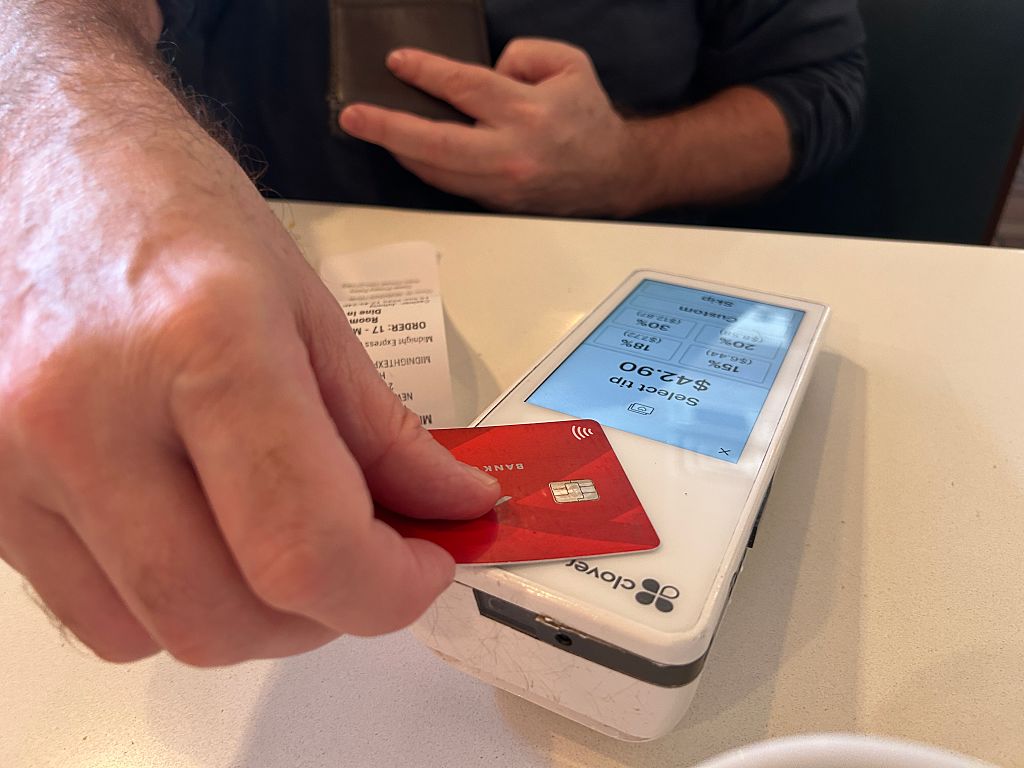
Midweek, Olivier dove into the growing phenomenon of livestream shopping, where a host demonstrates a product and interacts with potential buyers in real time online. The experience is also notable for frictionless purchasing, which can often be done with a click.
Through this research, Olivier said he came across the notion that livestream shopping builds an interactive “community,” where it can be as much about the interaction as the item. However, there are downsides, including high return rates and the inability to evaluate products in person. Olivier noted this is just one of many disruptions for in-person retail, which is becoming more about services than products.
Thursday
To close out the week, Olivier covered a Pew Research Center poll that showed a growing number of Americans identify as working class, including half of those with a bachelor’s degree and half of those in upper income brackets. Sixty percent of Americans say that the “working-class” label describes them – up 6 percentage points from 2024. With wealthier individuals now identifying as working class, Olivier wondered if the label is more of a cultural signifier than an economic one.
Politicians frequently target the “working class” in their campaigns, using it as a broad term to encapsulate as many voters as possible. Politicians – Olivier noted – often adopt a working-class persona, even those who were born well-off. The poll also revealed a partisan gap in which significantly more Republicans than Democrats claim they are working class.
Read more US Justice Department Pauses Cooperation With Canadian Government, WSJ Reports