






Away from headlines about inflation or the Iran war, a federal courtroom in Georgia has quietly become ground zero for what could be a far-reaching legal fight over federal border searches and the rights of American citizens to resist them.
Read more Lindsey Graham’s Funeral: What’s the Schedule? Who Will Attend?
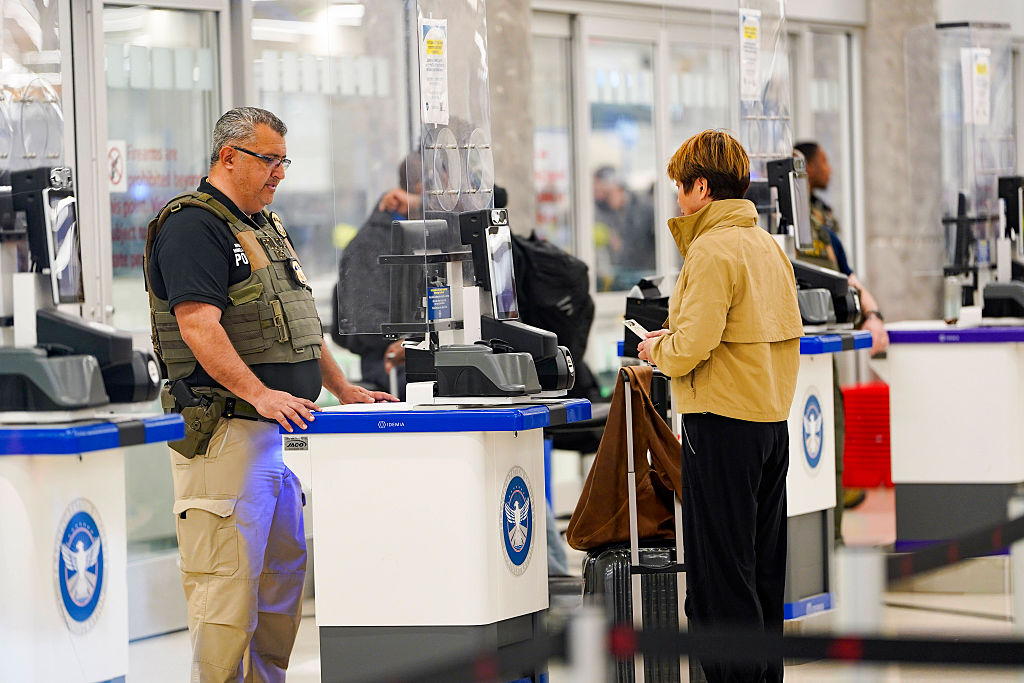
At the center of the tussle is Samuel Tunick, an activist from Atlanta. Tunick was coming home after a vacation in the Dominican Republic. At Hartsfield-Jackson International Airport, U.S. Customs and Border Protection agents demanded his cellphone and the code to unlock it, on the pretext of searching for child sexual abuse material.
But Tunick’s device was running GrapheneOS, an Android-based operating system that includes a “duress” code that wipes a phone’s digital contents and restores factory settings. When the agents entered the PIN he provided, things decidedly did not go as they had hoped.
The result: Tunick faces federal under a little-used statute that makes it a criminal offense to destroy property to prevent its seizure.
Your Rights at the Border
The case, filed in late 2025, could have ramifications for your rights at the border – even as an American citizen.
CBP claims nearly boundless authority to search people coming into the country, without a warrant, probable cause or individual suspicion. “All travelers are obligated to present their electronic devices and the information resident on the device in a condition that allows for the examination of the device and its contents,” the agency says.
The courts have recognized a “border search exception” to the Fourth Amendment, which forbids unreasonable searches and seizures.
Thanks to privacy rights litigation from the Electronic Frontier Foundation and the ACLU, we know the government divides searches into “basic” – a manual search that the agency says it can do without a warrant or suspicion – and “advanced,” in which agents use external equipment, requiring reasonable suspicion of illegal activity.
CBP says such searches are rare: In fiscal year 2025, less than 0.1% of arriving international travelers at a port of entry had their electronic devices searched.
But that’s small comfort to the unlucky few who’ve been searched. Think of the trove of personal data on your phone: your contacts, your recent calls, your photos, your browser search history, your social media, your conversations via encrypted apps and much more.
Read more France Braces for Fourth Major Heatwave as Crews Tackle Bordeaux Blaze
While U.S. citizens cannot be denied entry merely for refusing to turn over passcodes, some immigration attorneys warn that doing so can result in processing delays and having the device in question confiscated.
So What Can You Do?
If all of this has you feeling a bit helpless, fret not. The Electronic Frontier Foundation and the aforementioned attorneys have advice.
The Legal Team Hits Back
Tunick’s lawyers argue that the demand to search his phone was invalid because it violated his constitutional rights.
“Evidence obtained from Mr. Tunick’s phone – or lack thereof – should be suppressed as fruits of unlawfully obtained evidence,” they argue.
They also claim Tunick was being investigated for his participation in the “Defend the Atlanta Forest” movement – also known as “Stop Cop City” – meant to derail the construction of a police training facility.
The child sex material claim was “a pretext for a fishing expedition into Mr. Tunick’s connections with the Defend the Atlanta Forest movement,” his lawyers contend.
The Ramifications
The courts could rule in Tunick’s favor, which would be a major Fourth Amendment victory and a blow to the existing legal framework for border searches of electronic devices. Or they could side with the government, effectively making it illegal to install or use forensic search countermeasures.
And that would leave us with the irony of Americans losing some constitutional rights when entering the country.
Read more Way Cleared for Pop Singer D4vd to Stand Trial on Murder, Mutilation Charges