






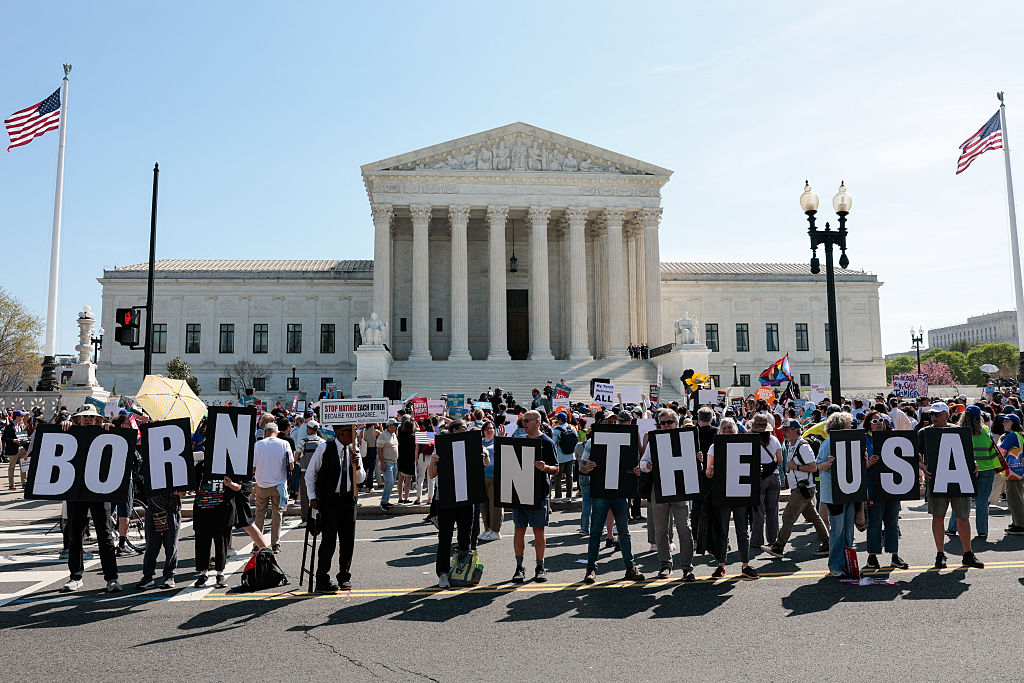
The Supreme Court on Tuesday upheld birthright citizenship, rejecting an executive order from President Donald Trump to end birthright citizenship.
A divided high court that children born in the U.S. to parents who are in the country unlawfully or are temporarily present are citizens at birth under the 14th Amendment’s Citizenship Clause.
The 14th Amendment states that “all persons born or naturalized in the United States, and subject to the jurisdiction thereof, are citizens of the United States.”
“Citizenship, then and now, was the right to have rights – to freely participate in our political community. The Framers of the Fourteenth Amendment extended that promise to ‘every free-born person in this land,’” Chief Justice John Roberts wrote.
Trump made the decades-old policy one of his main targets in his efforts to reshape the nation’s immigration system. He even attended the oral arguments in April to personally witness the legal battle.
Read more Former NBA Players Malik Beasley, Ed Davis Indicted on Gambling-Related Charges
On his first day in office, Trump signed an executive order to end birthright citizenship for children born in the U.S. to parents who are not in the country lawfully. The order was challenged by opponents who argued it violated the 14th Amendment. Lower courts blocked the order, and the Trump administration asked the Supreme Court to weigh in.
Had Trump’s executive order been deemed lawful, it would have meant some 200,000 babies born each year in the U.S. would not be guaranteed citizenship.
Trump has argued previously that the U.S. is “the only Country in the World STUPID enough to allow ‘Birthright’ Citizenship!”
Trump is not correct, but the practice is also not widespread.
Over 30 countries, nearly all of them in the Americas, offer birthright citizenship unconditionally. They include Canada, Mexico, Brazil and Argentina.
Read more US Supreme Court Orders Lower Court to Reconsider ‘Geofence’ Warrant Case