







By Jody Godoy and Lisa Richwine
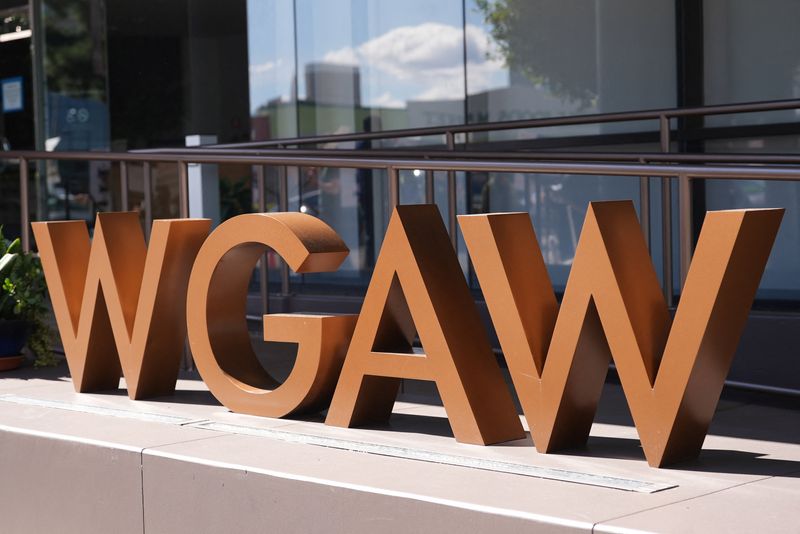
July 14 (Reuters) – The Writers Guild of America sued to block Paramount’s $110 billion acquisition of Warner Bros. Discovery on Tuesday, saying it would jeopardize writers’ livelihoods and threaten the health of the U.S. entertainment industry.
Read more US to Launch AI and Cybersecurity Coordination Group, White House Says
The case is another blow to Paramount’s bid to become a bigger rival to Netflix and Disney, a day after California and 11 other states sued to block the deal. While a ruling in either case would be enough to stop the deal, Paramount will now have to deal with a double dose of legal work.
The Writers Guild said in its lawsuit filed in San Francisco federal court that the deal would reduce the number of buyers in Hollywood for films and TV shows, harming its members.
“With fewer competitors, the merged Paramount-Warner Bros. entity would have both the incentive and the ability to lower costs by suppressing writers’ wages and reducing output. Writers will be paid less and have fewer employment opportunities,” the WGA complaint said.
The union, made up of the Writers Guild of America West and Writers Guild of America East, has 18,000 members across the entertainment industry.
A spokesperson for Paramount did not immediately respond to a request for comment.
Read more Dept of Justice Launches New Trade Fraud Enforcement Unit
The Writers Guild said that by combining two of five major Hollywood studios, the merger would unlawfully concentrate demand for writers of top-grossing films and episodic television series, and decrease the bargaining power of writers who enter exclusive deals with studios.
The Writers Guild pointed to a case brought by the U.S. Department of Justice that successfully blocked Penguin Random House’s bid to buy rival Simon & Schuster, on grounds that it would hinder competition in the market for top-selling books and lower advances paid to authors.
The case hinged on the argument that the combined company would control close to half the market for publishing, an effective monopsony that would leave hundreds of individual authors with fewer options and less leverage.
(Reporting by Jody Godoy in New York and Lisa Richwine and Dawn Chmielewski in Los Angeles, Editing by Franklin Paul, David Gregorio, Rod Nickel)
Read more Trump Says US Will Be Doing a Lot of Deals With Iraq, Taking a Lot of Oil Out
Copyright 2026 Thomson Reuters.